
Samsung launches Korea’s biggest recruitment plan with 60,000 new hires
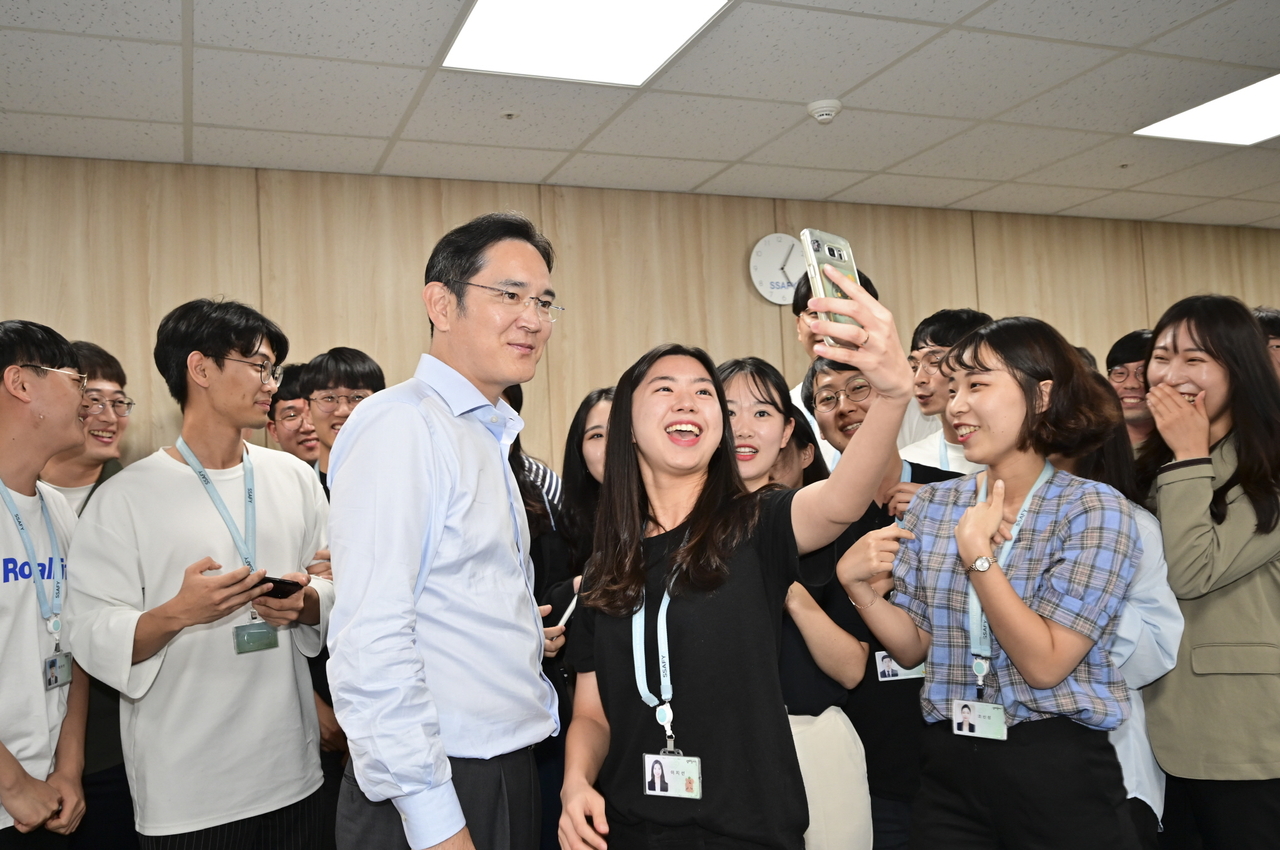
South Korea’s largest conglomerates on Thursday announced extensive hiring plans, aiming to secure talent for future growth businesses while expanding youth employment. The moves come after President Lee Jae Myung urged companies this week to help address the country's weakening youth job market.
Samsung Electronics, the country's largest conglomerate by revenue, unveiled that the company and its affiliates will hire 60,000 people over the next five years, constituting one of South Korea's largest recruitment plans.
The recruitment drive, averaging 12,000 new hires annually, will focus on semiconductors, core components, biotechnology and artificial intelligence. Samsung said the expansion reflects its "people-first" management philosophy and commitment to providing fair opportunities for young job seekers.
In the group's recruitment rounds in the second half of this year, 19 Samsung affiliates will participate, including Samsung Electronics, Samsung C&T and Samsung Biologics.
Alongside direct employment, Samsung said it will broaden internship opportunities linked to full-time jobs. The goal is to give university students more hands-on experience and hire proven candidates from the pool, the company said.
It will also step up recruitment of technical talent such as graduates of vocational high schools and medalists from national skills competitions. Since 2007, Samsung has supported national skills events in South Korea and WorldSkills international competitions, providing special employment opportunities for more than 1,600 prize winners.
Samsung was the first Korean company to launch an open recruitment system in 1957, introducing a public hiring process that has been maintained for nearly 70 years.
"By hiring 60,000 people and expanding training programs, Samsung will reinforce its global leadership in semiconductors, biotechnology and AI, while providing young people with fair opportunities and long-term career prospects," the company said.
On the same day, SK Group, the country's second-largest conglomerate, announced plans to hire 8,000 people this year, focusing on AI, semiconductors and digital technologies.
SK hynix, the group's memory chip affiliate, will accept applications for new employees from Monday to Oct. 1, targeting roles in chip design, devices, research and development and manufacturing technologies. The hiring plan is tied to the company's expansion in AI semiconductors, with thousands of additional jobs expected once its new chip cluster in Yongin, Gyeonggi Province, begins operations in 2027, the chipmaker said.
SK hynix is also expanding production at its Cheongju M15 fab in North Chungcheong Province for next-generation DRAM, further boosting demand for engineers and technicians.
Group affiliates plan to recruit across key projects, including the SK AI Data Center in Ulsan, which broke ground last month and is being developed as a strategic hub for cloud and AI services.
"Even with rapid changes such as the rise of AI and global uncertainties, securing competitive young talent in time is the foundation of sustainable growth," an SK Group official said. "We will continue to invest in recruitment and training support to strengthen national competitiveness in key fields such as AI."
Hyundai Motor Group, South Korea's third-largest conglomerate, will be hiring 7,200 young workers this year and is considering expanding the figure to 10,000 in 2026.
The automotive giant's hiring plan is designed to strengthen its competitiveness in electric vehicles and software-defined vehicles, while also boosting national economic activity through job creation. The group said the impact will extend across related industries such as auto parts, steel and construction, amplifying employment effects throughout the supply chain.
Recruitment will target future-oriented businesses, including electrification, SDV development, safety and quality control, global market expansion and brand enhancement.
The automaker is also expanding its internship programs, which are currently offered across major affiliates including in automotive, parts, steel, advertising and finance units. Now involving about 400 interns annually, the program will be doubled to 800 next year, with outstanding participants given preference for hiring, the company explained.
LG Group said it is also planning to hire 10,000 people over the next three years, including about 7,000 new graduates, as the conglomerate expands recruitment in AI, biotechnology and clean technology.
The group said its affiliates will also focus on securing talent in batteries and automotive electronics, heating and cooling systems and R&D, as part of efforts to strengthen competitiveness in business-to-business operations and future growth sectors.
Posco Group said it will hire 15,000 people over the next five years as part of its youth employment initiative. For this year, the company finalized plans to recruit 3,000 people, up 400 from the originally planned 2,600. Posco added it will maintain a similar annual hiring scale through 2029, with a particular focus on safety, artificial intelligence and research and development.
Hanwha Group also announced it will conduct new recruitment rounds across 30 affiliates in the second half of this year, with a total of 3,500 hires — an increase of about 1,400 compared to the first half. Annual recruitment figures by affiliate include Hanwha Aerospace at 1,100, Hanwha Ocean at 800, Hanwha Systems at 550, Hanwha Life Insurance at 300, Hanwha General Insurance at 250 and Hanwha Investment & Securities at 200.
HD Hyundai Group said it will hire around 1,500 people this year, while planning to bring in 10,000 new employees across 19 affiliates over the next five years. Recruitment will focus on shipbuilding, construction equipment and energy, with a particular emphasis on securing research and development talent for eco-friendly technologies, digital smart solutions and hydrogen and bio businesses.
By Jo He-rim (herim@heraldcorp.com)